
Two Walks through History in Roscommon
THE WALKS:
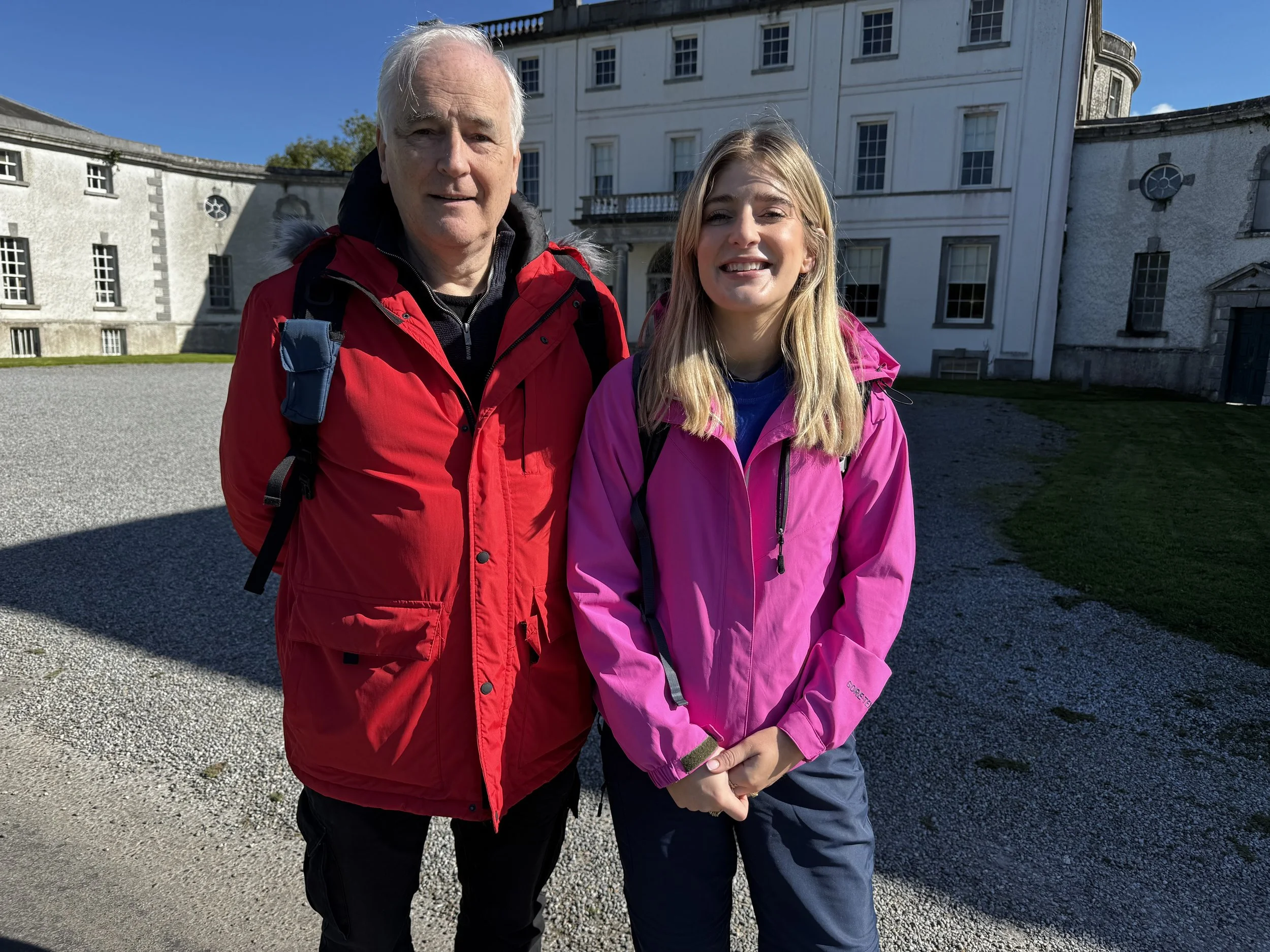
Doireann Ní Ghlacáin travels to the heart of Ireland's midlands for two walks steeped in history and quiet beauty in Roscommon. Historian and broadcaster Myles Dungan accompanies Doireann on a powerful journey along part of the National Famine Way, walking a short loop at Strokestown Park House before travelling to the ancient royal site of Rathcroghan, one of Ireland's most significant yet little known archaeological landscapes.
Walk 1:
Distance: 1km loop
Starting Point: Strokestown Park House
Terrain: Path
Difficulty: Easy
Duration: 20 mins
Best for: History enthusiasts, those drawn to Ireland's Famine story
Walk 2:
Distance: 7.4km at Rathcroghan
Starting Point: Rathcroghan
Terrain: Open landscape
Difficulty: Easy to Moderate
Duration: 2-3 hours
Best for: Families, ancient Ireland enthusiasts
OUR TRAIL TIPS:
Navigation: The National Famine Way is waymarked. Download a trail map or use a navigation app before setting out.
At Rathcorghan, sections follow quiet rural roads so be aware of traffic. Rathcroghan Visitor Centre is a great resource for information about the site.
Weather: This is open, exposed countryside. Dress in layers and be prepared for wind and rain, even on dry days. Good waterproofs are recommended.
What to Bring: Comfortable walking shoes or boots, waterproofs, water, snacks, and a camera. The landscape is vast.
Getting There: Both Strokestown House and Rathcroghan are easily reached by car. Visit their websites for more information and plan ahead.
Trail Conditions: Paths can be soft or muddy in wet weather. Check local conditions before setting out.
ABOUT THE NATIONAL FAMINE WAY:
The National Famine Way is a 165km walking and cycling route tracing the journey of over 1,000 survivors of the Great Famine who walked from Strokestown, Co. Roscommon to Dublin in 1847, where they boarded coffin ships bound for North America.
ABOUT RATHCROGHAN:
Rathcroghan is one of Ireland's most important ancient royal sites traditionally the seat of the Kings and Queens of Connacht and home to the legendary Queen Maeve of the Táin. With over 240 recorded monuments, it is a landscape of extraordinary depth and significance.